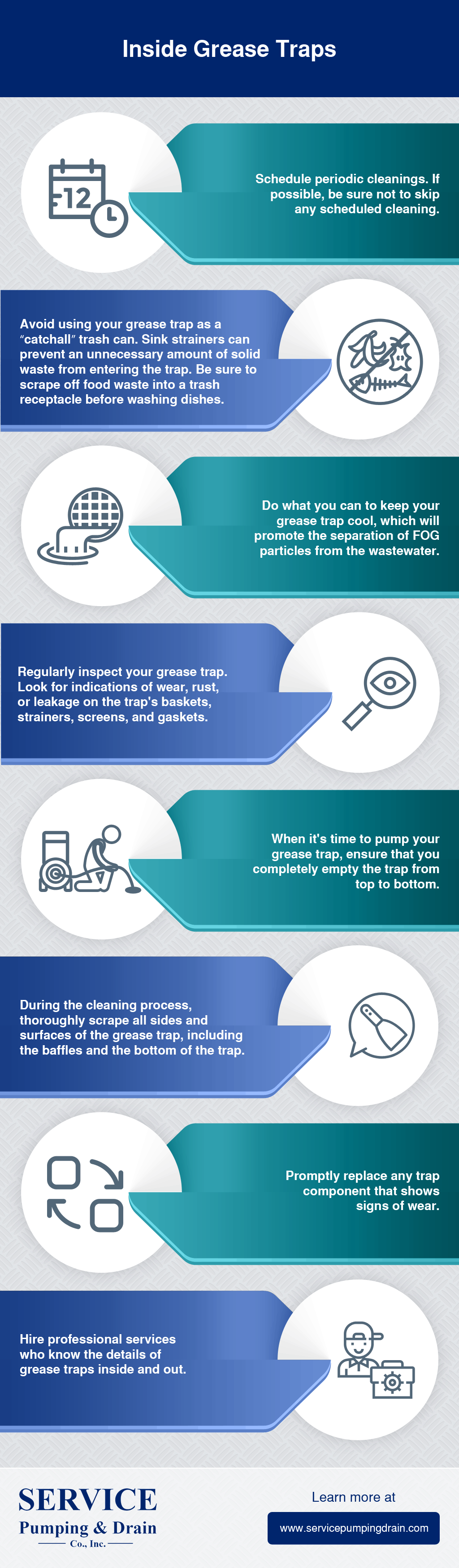
- The flow rate controller slows the incoming wastewater before it enters the trap.
- Cool water previously contained in the trap causes FOG particles to harden and float.
- As the water cools, the trap’s baffles also slow the flow of the wastewater. Baffles that protrude upwards trap the solid particles at the bottom, while downward baffles trap the floating FOG particles at the water’s surface.
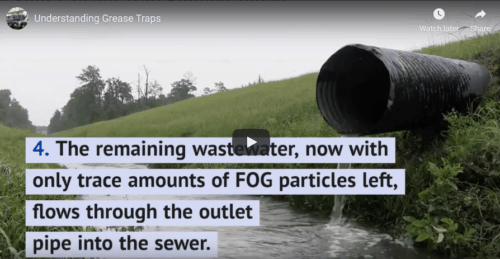
- The remaining wastewater, now with only trace amounts of FOG particles left, flows through the outlet pipe into the sewer.
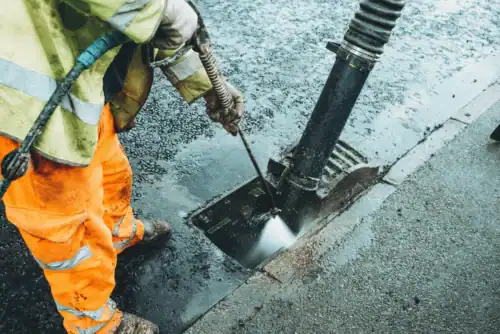
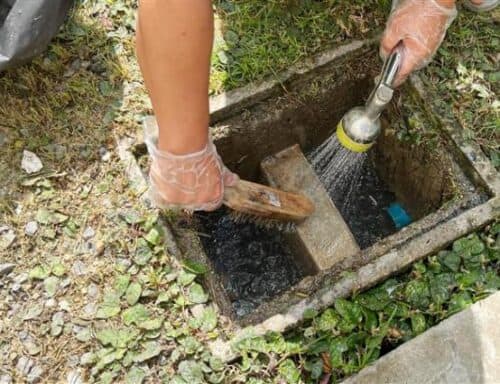
While a properly functioning grease trap will prevent sewage system stoppages, FOG and food particles will still remain in the trap. It’s important to schedule regular grease trap cleaning to prevent bad odors in the kitchen, as well as spillovers and blockages.
Commercial grease traps typically have a holding capacity of 1,000–2,000 gallons. They’re buried underground in a broad trench that sits upon a solid cement footing. This trench is located between the building’s plumbing system and the sewer.
Regular cleaning and maintenance are critical to the ongoing usefulness of a commercial grease trap. Even though business owners may have a lot on their plate, they shouldn’t neglect grease trap maintenance. The United States Environmental Protection Agency reports that “nearly half of all the 400,000 sewer blockages that occur annually are caused by grease, and many of these contribute to the 40,000 annual sewer overflows.” Furthermore, major cleanup costs can exceed $100,000 per incident.
Large establishments such as universities, hospitals, and restaurants generate significant amounts of waste. Restaurant owners in particular need to closely monitor their current procedures for grease trap cleaning and maintenance. Waste from grilled, fried, and baked foods results in high amounts of FOG particles accumulating in the trap on a daily basis.