Commercial catch basins are an integral part of environmental protection. Properly cleaning and maintaining storm water structures helps communities prevent flooding and other adverse water-related incidents. It’s up to city staff and property owners to ensure that they keep catch basins clear of debris and minimize contamination risks.
Catch basins are generally found along curbs and traffic intersections. They also appear in parking lots and parking structures. Catch basins collect leaves, natural debris, and litter to prevent them from clogging storm drains and sewage pipes. They often use steel grates to trap debris, and many include sumps as well to collect smaller pieces of sediment.
Keeping the Catch Basin Clean
Routinely cleaning catch basins helps maintain healthy communities no matter the time of year. Clogged catch basins result in flooded streets, creating hazardous conditions for motorists and pedestrians.
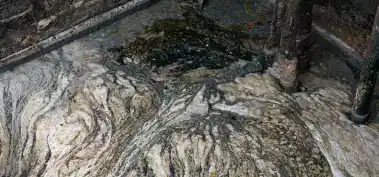
Clogged catch basins also can pose health risks and negatively affect your community’s quality of life if mold is allowed to fester in unattended debris. Furthermore, clogged drains create standing water, which attracts mosquitoes and other potential disease-carrying insect life.
Forgoing a proper catch basin maintenance schedule can also result in damage to sewer pipes and street, gutter, curb, and sidewalk concrete, incurring further maintenance costs down the line.
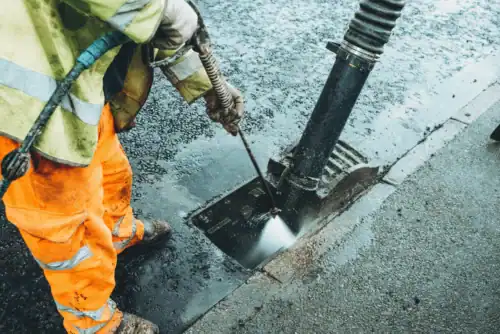
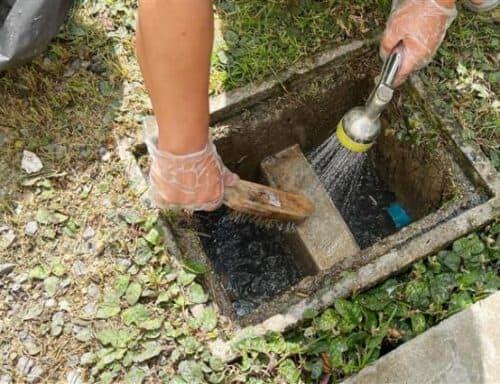
Cleanup entails removing debris from the basin and sediment from the sump. When necessary, workers use high-pressure water jets that can achieve up to 4,000 PSI of water pressure to wash down drain structures and lines.
Maintaining Catch Basins
Most cities and municipalities have public workers who clear catch basins. But when catch basins fall on the private property of businesses or homeowners, it’s up to these individuals to maintain the basins themselves. Most private catch basin managers create annual or biannual cleaning schedules to ensure that someone regularly removes litter and sediment from the basins at all times.
Storm water management companies can assure that your catch basins maintain proper cleaning schedules, compliance reporting for the governing authority, and proper disposal of sediment waste. They offer several different maintenance plans depending on basin depth, use, and varieties of litter and debris that typically affect them.
Older catch basins may require different cleaning techniques from new ones. Additionally, the amount of vehicle or pedestrian traffic the area around a basin experiences also affects coordinating a maintenance schedule. Proper care can be as simple as weekly light cleaning, but some basins may require high-pressure washing every day.
Cleaner Catch Basins with Service Pumping & Drain Co., Inc.
Our professional catch basin cleaning services will provide the expertise and knowhow to keep them in proper working condition. Service Pumping & Drain Co., Inc. has had more than 85 years of experience in handling catch basin drainage and sewer problems in New Hampshire, Boston, and eastern Massachusetts. We now have more than 12,000 customers throughout New England.
Service Pumping & Drain Co., Inc. also offers septic system maintenance, grease trap cleaning and maintenance, pipeline video inspections, beneficial reuse and recycling, and more. Our 20-vehicle fleet operated by our staff of talented and friendly employees offers the best up-to-date service in the business. Give us a call whether you have an emergency or want an estimate on routine catch basin management. Our emergency services are available 24 hours a day.
Commercial storm drain and catch basin systems handle significantly more volume and debris after stormy winters and heavy rain events. Without regular storm drain cleaning, these systems can fail, often at the worst possible time. However, some key maintenance tips from cleaning professionals and a proactive approach to drain cleaning can keep systems running without interruption. Keep reading to learn more about commercial storm drain cleaning and maintenance from your local experts.
Grease traps play an essential role in keeping commercial kitchens, food-service operations, and multi-unit facilities running smoothly. When fats, oils, and grease enter your plumbing system unchecked, they cool, harden, and cling to the inside of your pipes. Over time, this buildup can cause slow drains, backups, foul odors, and even costly shutdowns. A properly installed and well-maintained grease trap prevents those problems by capturing grease before it reaches your septic or municipal wastewater system.
The key to managing wastewater and FOG remediation is regularly pumping out and cleaning grease traps and interceptors. Keep reading to learn more about how to maintain grease traps and how a provider like Service Pumping & Drain Co., Inc.™ can help.
We believe quality service is a direct result of well-trained, highly motivated individuals working together for a common goal:"top-notch" work performed in a friendly, efficient manner. We recognize that the superior service we provide is our defining characteristic, and what differentiates SP&D from its competitors.
We use cookies to ensure that we give you the best experience on our website. If you continue to use this site we will assume that you are happy with it.